What is your First class of Emotion Learning?
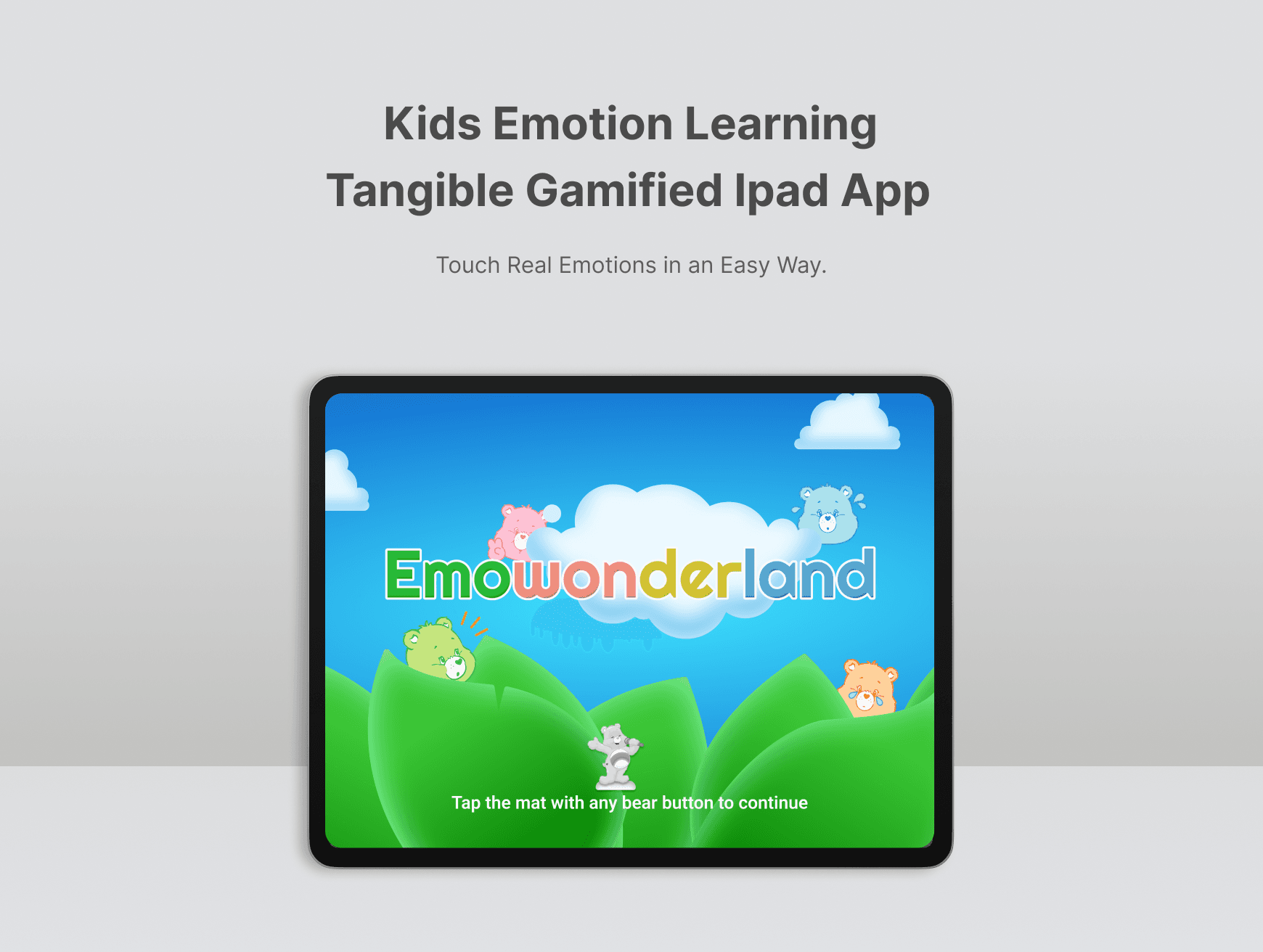
An Tangible Game Designed to Help Children aged 3-5 in Learning to Navigate their Emotions Through Play.
Jan 2023 - Aug 2023
Timeline
Personal Project
Role
Personal Project
Timeline
Challenge
What Did You Learn in Early Childhood?
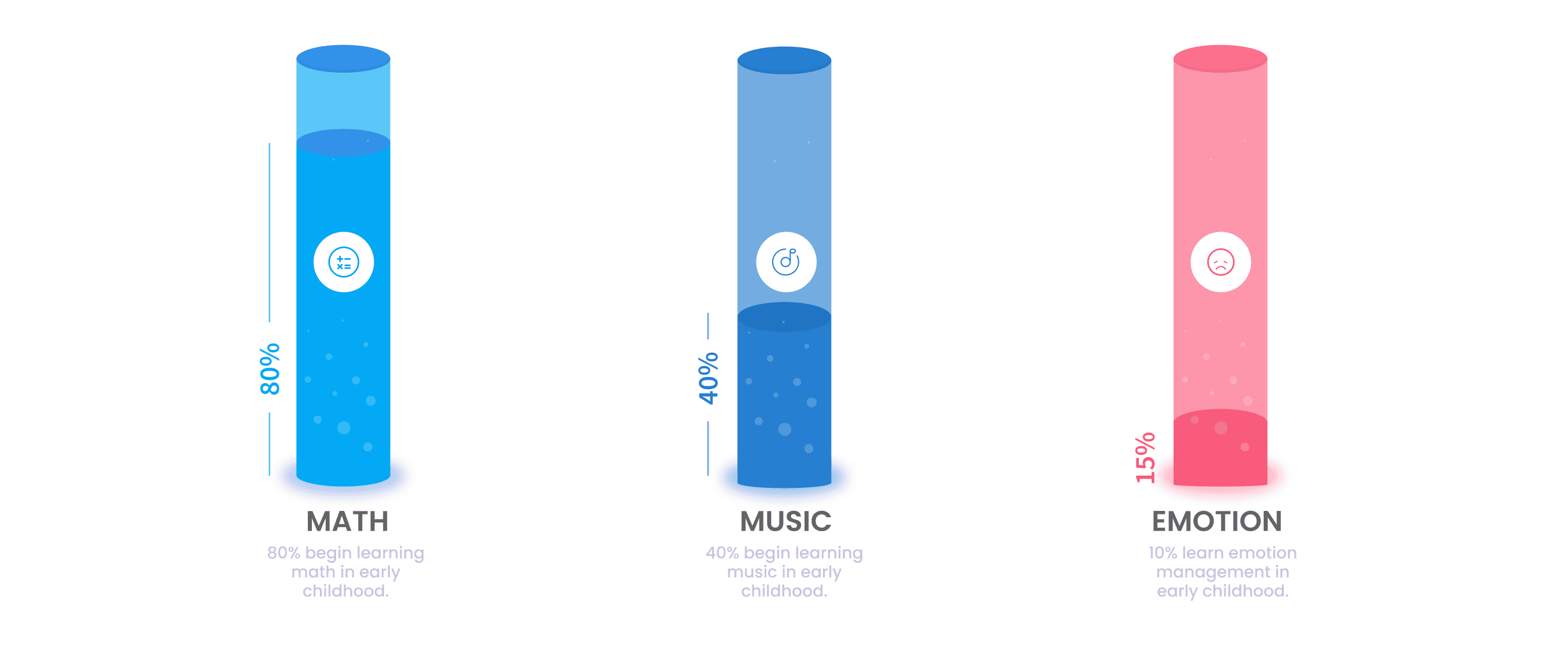
According to the research, most people receive math or music education in early childhood, yet there is a notable lack of emotional learning in early childhood.

Facts
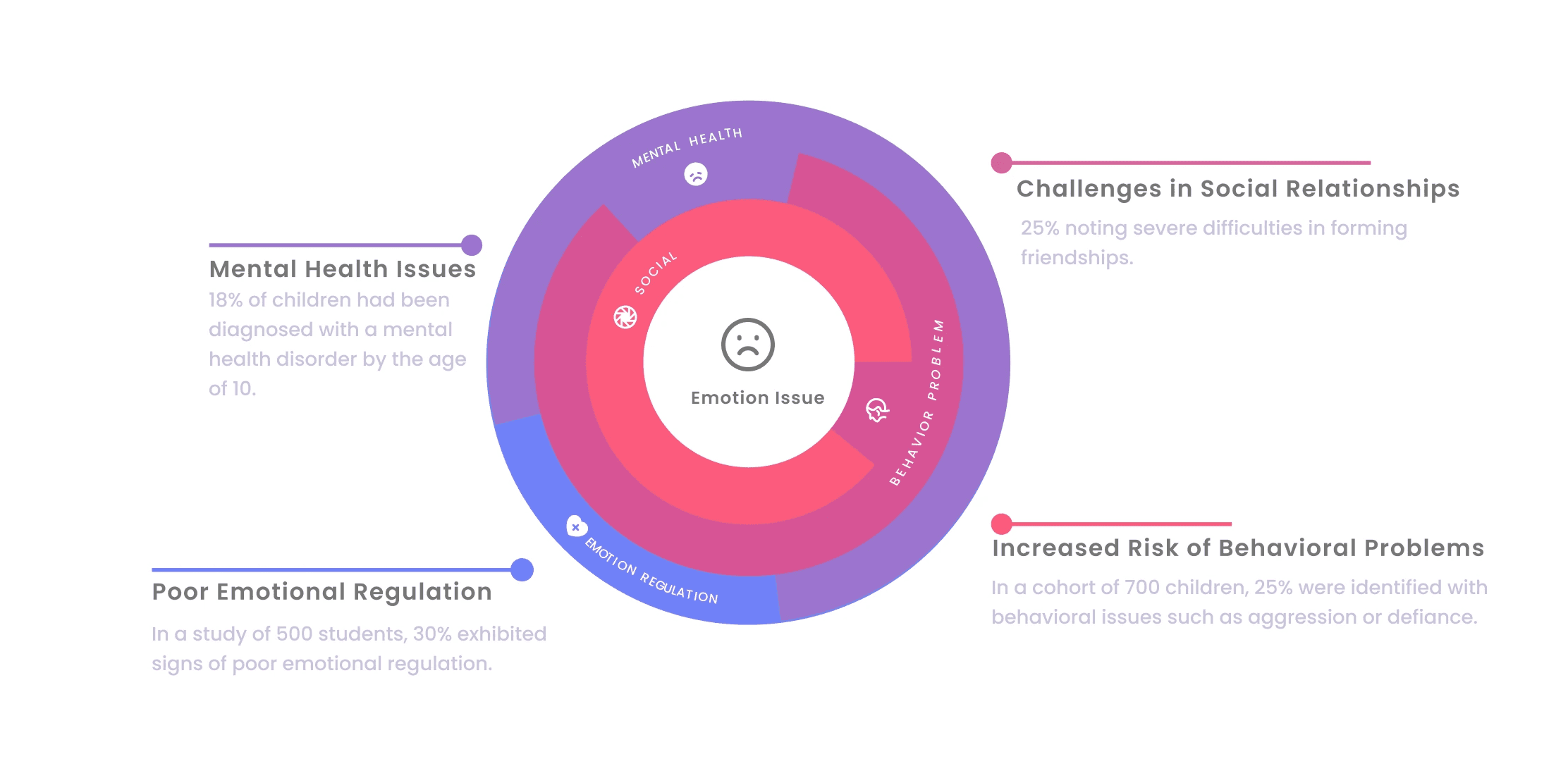
Due to the overlooked importance of emotional education in early childhood, here are some common issues people may encounter as they grow up.
Research
So, What Kind of Emotional Education Do People in early age Need?
Persona
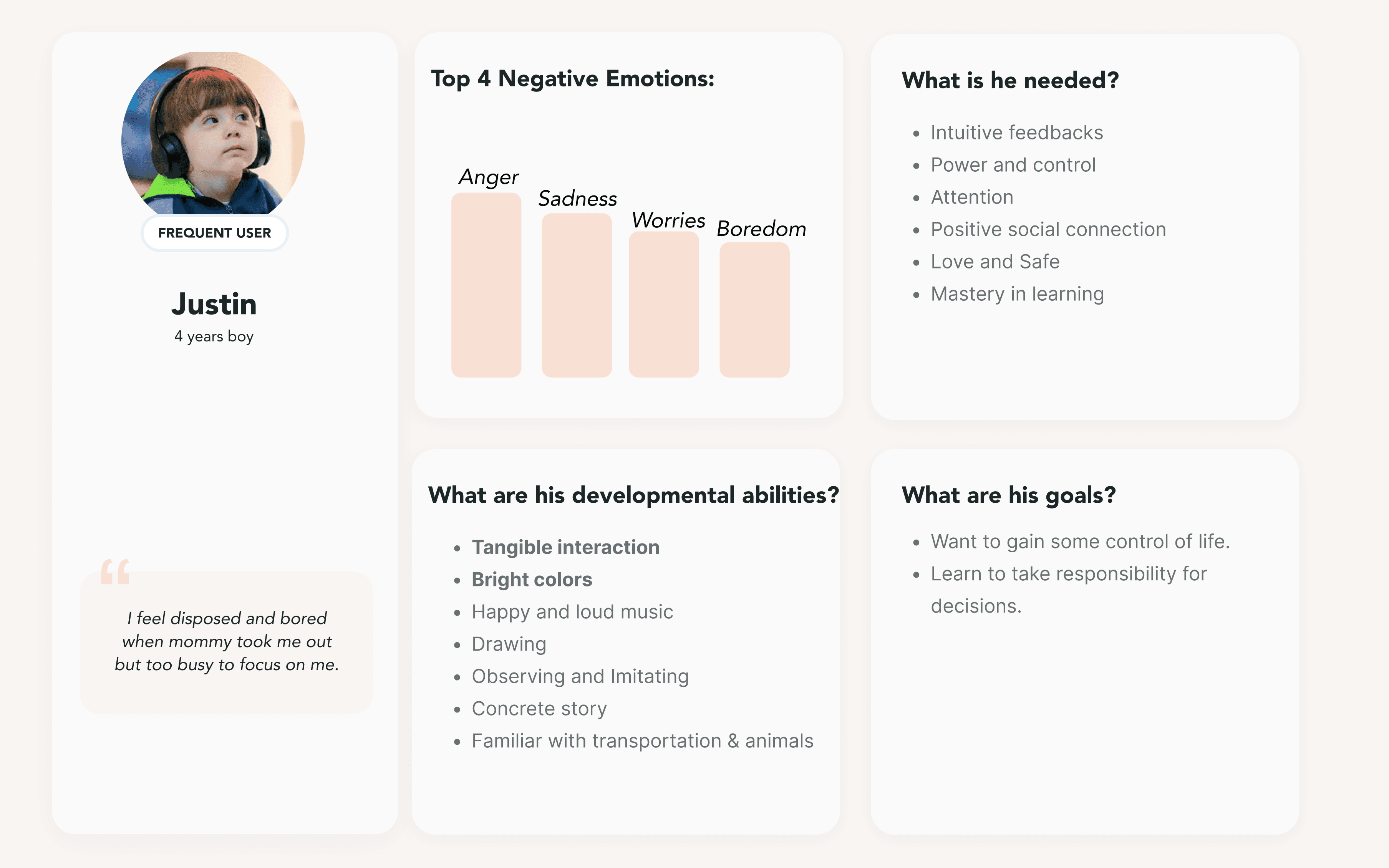
I extract the Top 4 negative emotions that kids would face when they are young, and show the underlying needs as well as the capabilities required to cope with them.
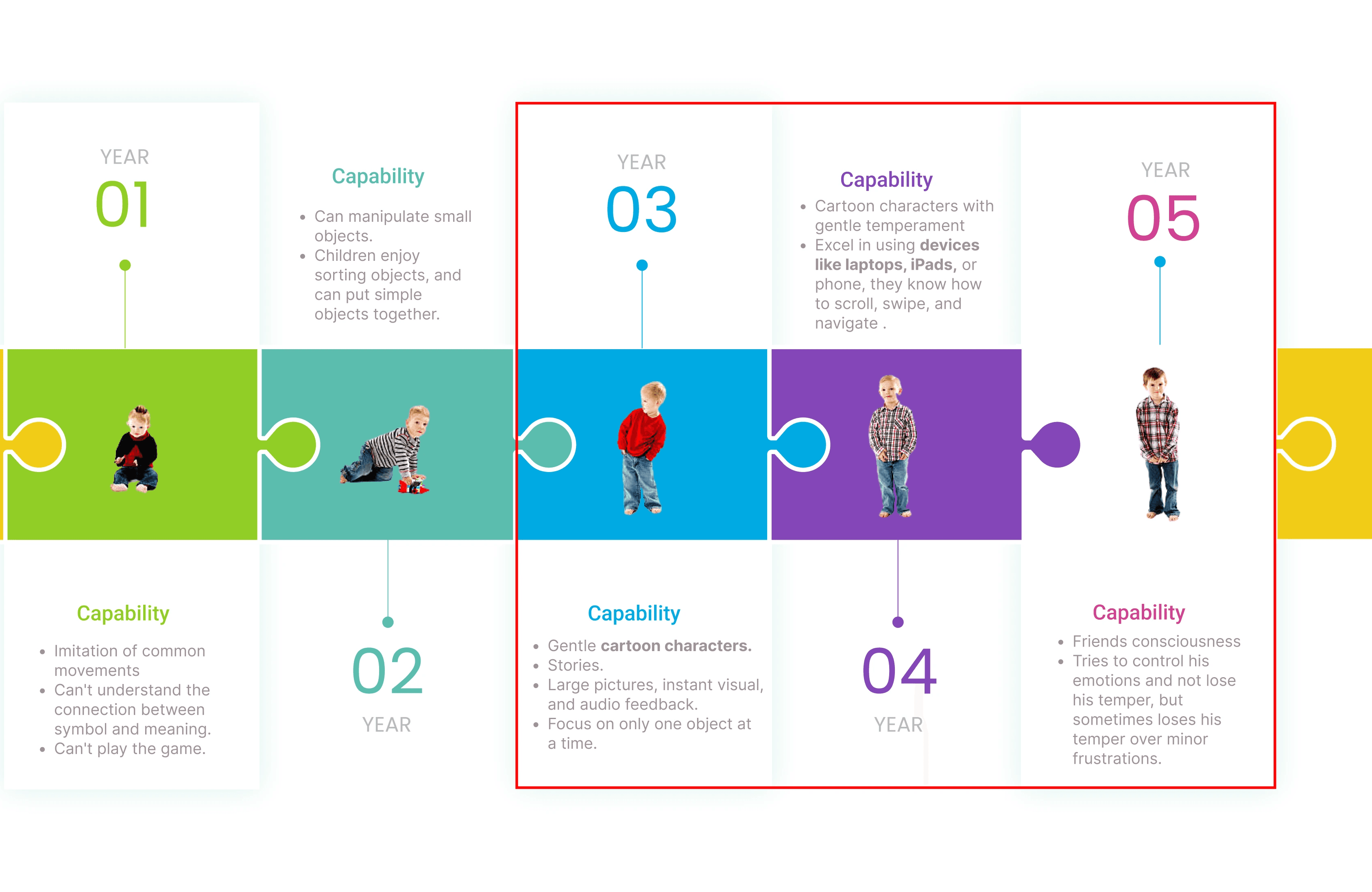
To find the ideal age for starting emotional education, I researched kids' preferences and capabilities. The result: Ages 3 to 5 emerged as the perfect time to begin teaching emotion management.
Interface Choice
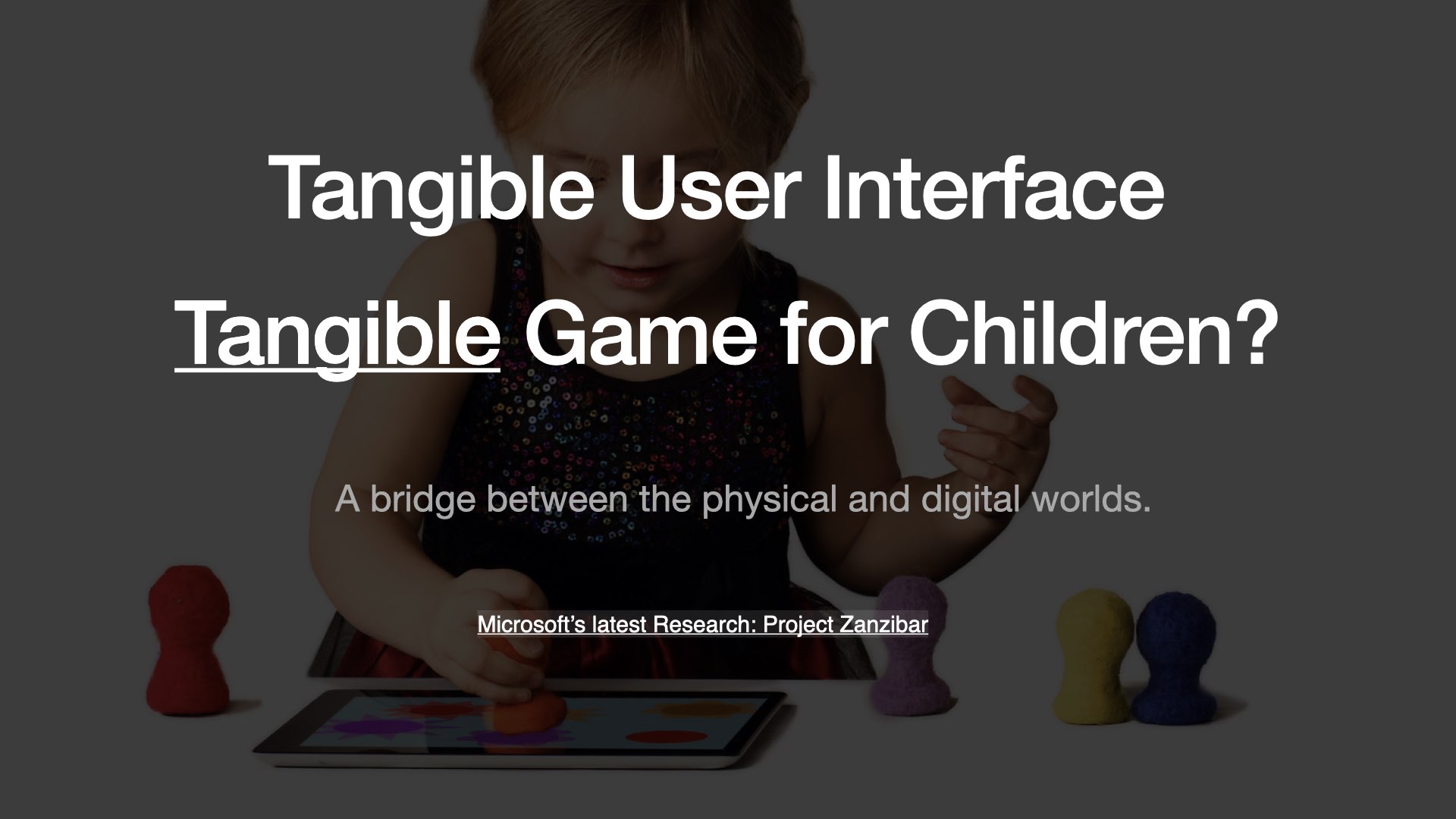
In order to highly accommondate children's capability aged 3-5, I conducted research on what technology could fit this needs. Eventually, I found Tangible User Interfaces as the final interface mode.
A key characteristic of tangible user interfaces is that users can intuitively understand how to interact with the interface by grasping the function of physical objects. Consequently, users, especially children at an early age, do not require explicit learning of functionality, making tangible user interfaces particularly well-suited for early learning experiences.
Design
Wireframe
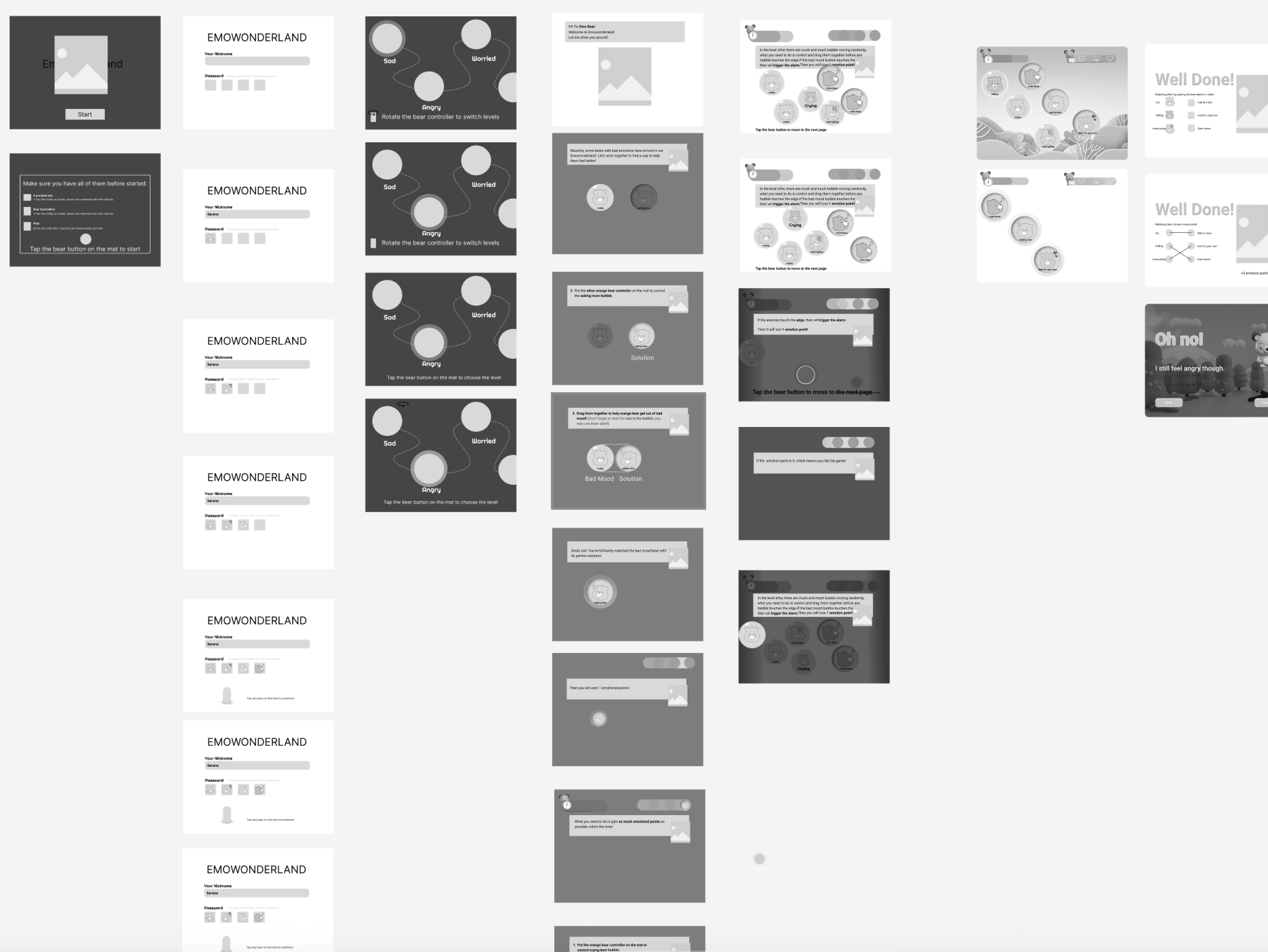
I created 40 + wireframe pages and find 5 users (average 4 years old) to conduct usability testing.
Content Design
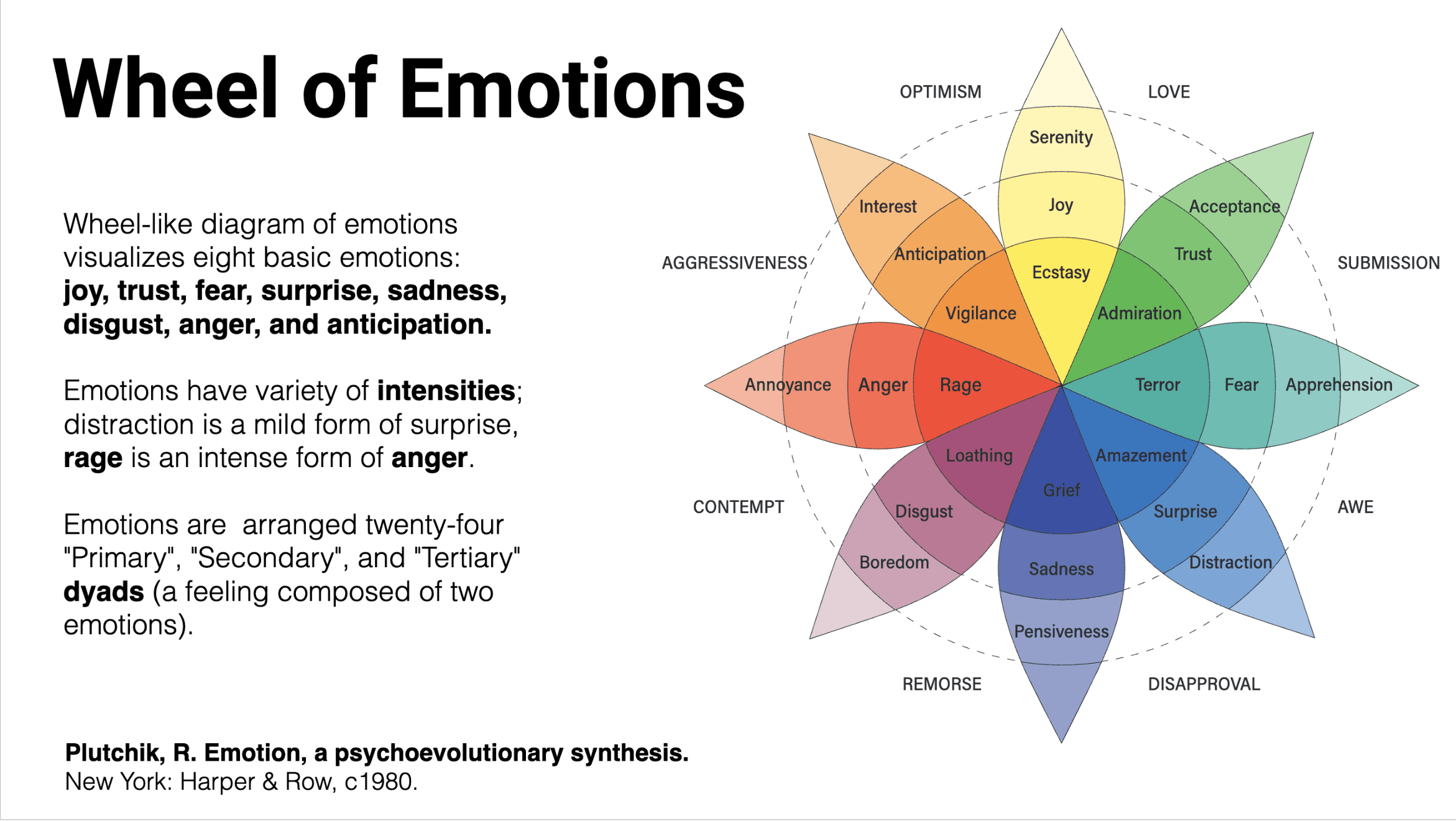
Based on the theory of Wheel of Emotion, it introduces 8 primary emotions of human, however, 8 is too much for kids so I narrow it down into 4 as a origin set.
Seeking a balance of both customer (parents) and user(kids)
Based on the theory of Wheel of Emotion, it introduces 8 primary emotions of human, however, 8 is too much for kids so I narrow it down into 4 as a origin set.
Usability Testing
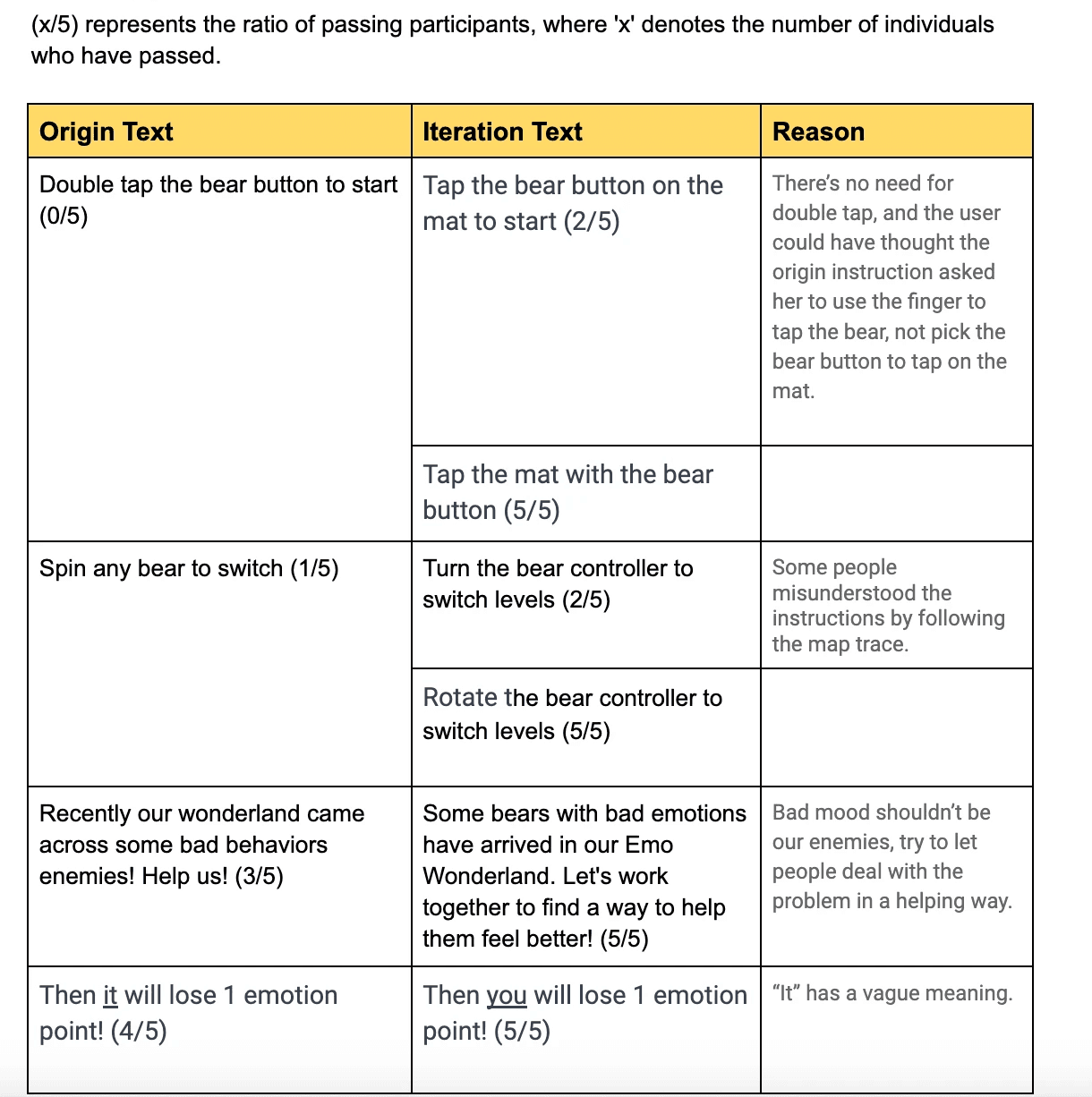
Before conducting my design into high fidelity design, I take my wireframe to 5 users (average 4 years old) doing the simulation test, including text, size, storytelling, structure,visual iteration. The satisfaction of 2nd usability testing raises 36% .
Text Iteration
Structure Iteration
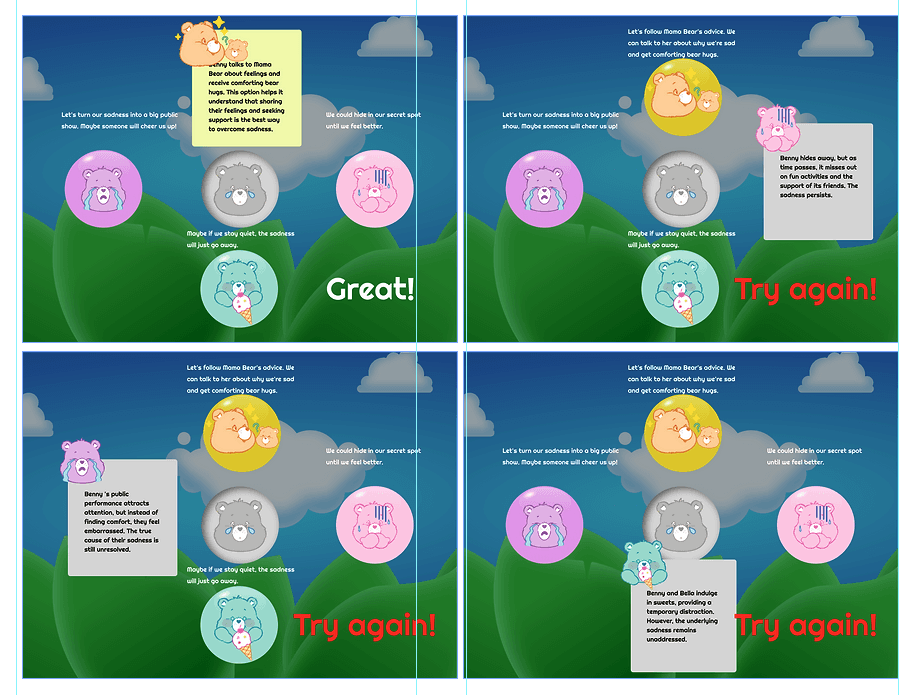
Before conducting my design into high fidelity design, I take my wireframe to 5 users (average 4 years old) doing the simulation test, including text, size, storytelling, structure,visual iteration. The satisfaction of 2nd usability testing raises 36% .
Potential Impact
1
UX: Starting at Children, More than Children
Although this scenario starts at children, but it actually means more to show is usability, because the user knows intuitively how to use the interface by knowing the function of the physical object. So, the user does not need to learn the functionality. That is why the Tangible User interface is often used to make technology more accessible for children, people with disability, elderly, people with mental issue like ADHD….
2
Technology Revolution: TUI (Tangible User Interface)
It’s also a revolution of the interaction method after pointer-interaction(mouse), touch interaction(phone), wearable interaction (AR/VR), TUI marks the beginning of the era of tangible interaction. The integration of machine learning and neural networks opens up vast possibilities for new interaction.
3
Business: New Possibilities of Creative Learning
The integration of these advanced technologies is reshaping how we approach design, offering new possibilities and challenges. This post aims to explore how AI and machine learning are influencing the field of UI/UX, bringing a new dimension to user experiences and interfaces.
Tools
Figma
Zoom
Conclusion
In the realm of technology, artificial intelligence (AI) and machine learning have emerged as game-changers, particularly in the field of UI/UX design. The integration of these advanced technologies is reshaping how we approach design, offering new possibilities and challenges. This post aims to explore how AI and machine learning are influencing the field of UI/UX, bringing a new dimension to user experiences and interfaces.